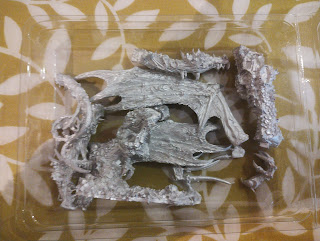
So a week or two ago i received my pre-order copy of the Darksouls TTRPG, a purchase made mainly out of morbid curiosity. Since then I've given it a few flip throughs and reflected a bit on what I've read (also has anyone actually seen anyone else review this yet? i know review copy's have been out for at least 2 months)
So first off this system is based off 5e, this means it uses the core mechanics and procedures for attack, skills, saving throws and many abilities. This is a mixed blessing, Steam forged games have not been afraid of completely gutting certain things like the magic system, subclasses and races. Some systems however like the exploration mechanics could have used a new system instead of being pasted across.
First actual mechanic the book displays is the Backstory, Memories and Drives, each of these give advantage on a roll once a rest if you invoke this aspect of your character. Origins are what gives you your hit dice size, stat array and a bloodied ability (somthing that activates when you reach half HP) this is an odd mechanic that doesn't really have a base in either D&D or Darksouls. Generally your going to want one that complements your class but i guess in the case of the deprived class this flexibility helps.
Classes generally mirror one of the D&D classes in some way, though there are those that are some form of mix of different ideas. Each of class has their own features some borrowed from the 5e D&D SRD and other completely original, Knight is your standard fighter and gets fighting styles, Mercenaries get the rangers favoured enemy, Assassins get the rouges sneak attack, Warrior gets the barbarians rage, thief's get a range attack limited version of sneak attack and Heralds get the divine sense of Paladins. The Caster classes gain their spell casting feature as their primary ability. It would take a long time to categorise and compare the different abilities of these classes, what I will say is I've noticed that a lot of the pseudo resources of 5e like Ki, Sorcery points and Martial dice have mostly been replaced with position costs which is somthing I quite like.
So what is position? its the games version of HP, it scales much in the same way that HP does in 5e, except that you roll the dice each combat???? this is bizarre to be honest and means that unless this rolled temp hp is whittled down and damage is done to your base hp fight could not have consequence, its also worth noting that you only roll this hp in combat traps attack your much lower base hp directly making them VERY deadly, if you are running this system MAKE USE OF TRAPS. Some abilities allow you to spend Position to trigger them and high level spells require you to spend Position to cast, this is usually quite small amounts you are spending at any one time so i wonder how much this would change combat from 5e's default.
So spells, this game has a ton of spells from across the darksouls series, a good mix of DS 1,2 and 3 spells provide a good amount of verity however there is a lack of utility spells due to all the spells coming from Darksouls. Most spells require a position cost to cast though utility and low level healing/ damage spells tend not to, each spell also has a minimum character level needed to cast it, a number of attunement slots it takes up to have it prepared and a number of casts. Apart from that they work similar to D&D 5e spells do.
Equipment is an interesting section, firstly it has the rules for a slot based encumbrance system which splits between active slots(what your wearing/Holding) and Equipment slots(other stuff your carrying around). the weight of armour or weapons you can use depends on your strength score, to use the heavy weapons for instance you need a minimum of 13 str and to wear the heaviest armour you need a minimum of 18 strength. The mundane equipment are a mix of standard equipment from the 5e PHB and Some darksouls inspired items such as an Estus flask or pine resins etc, this works well in the systems favour as unlike the spell selection you have access to standard adventuring equipment.
Armour, weapons and shields all have special abilities tied to them which range in effects and usefulness, im a fan of this idea it helps capture some of the fun equipment options of darksouls while not being too overcomplex, some of the options do fall flat for instance some of the boss weapons are stupidly underpowered compared to more common equipment such as the (Moonlight Great sword only dealing 1d6 dmg while being 2 handed and requiring 15 strength to use) and some abilities like most of the Katanas just don't work " Spend 2 position after suffering damage to reduce that damage by -2" but position is hp??? so your spending 2 hp to reduce the damage by 2 hp?? how did noone pick this up when designing this?. There is defiantly somthing cool here which i would love to steal and adapt but as presented it needs some work, too many typos and bad design if you pick up this game bear in mind that you may have to adjust weapon power to your tastes.
Next gets into the DM section of the book, starting with a breath table indicating the value of different souls you may find throughout the world, there is table later on that refers back to this one when talking about balancing loot to level. there is a brief section of general GMing and adjusting the difficulty of the game to your own tastes or your tables, and a brief section on the systems stance towards official DS lore, to put it simply they shied away from adding anything to the lore or removing any ambiguity to preserve the feel of darksouls and allow GMs to adjust it to their own lore preference. There are some short tables for generating darksouls themed locations, plots and themes, they are good but i feel could be made longer since the d10 tables are across a whole page each and could easily be expanded to a d20, these should give a good starting point but i imagine for anyone familiar with the darksouls franchise making your own shouldn't be too hard, the quests are all active (go here and do that, or find this) so should give clear objectives for you players to follow without too much confusion, thinking about how to tie these in to a greater adventure will be useful as alot of these seem to be fairly simple or short tasks.
There is short encounter table and boss table with some of the monsters listed in the later bestiary (except the Ghru, which is listed on this table but doesn't have a stat block) later on there are more encounter tables tied to specific locations. There is then a section on NPCs which discusses a few approaches to handling NPCs and a name generation table for NPCs, personally i would recommend this table https://www.fantasynamegenerators.com/dark-souls-names.php as an option for more varied results, there is a small table with Npc Quirks, side quests and gifts the NPC may give. There is a section discussing campaigns and motivating players advising to have a limited and more focused campaign. Estus flasks and bonfires are discussed in relation to managing difficulty, the easier you want a section the more bonfires and the harder you want it the less, this is interesting to consider with the 6 encounter assumption that 5e has as bonfires directly influence when and where players can long rest and recharge their abilities, though i imagine much of the monsters provided in the book are more deadly than most standard 5e monsters.
There is then a overview on the world of Darksouls, focusing on the Darksouls 3 world of Lothric, each section is quite brief having an over view of the location, relevant encounters, Npcs and Bosses. No maps are provided in this section there is even a note encouraging the GM to make their own sections rather than copy locations layout directly from the games, i think this is the right approach, a lot of things that work for video games wont work as well for ttrpg game, for instance the ability to climb and traverse the environment is more limited in a video game, where as the ttrpg contains climbing equipment and rope you can freely use to explore.
The Bestiary section, now this is an interesting selection of monsters from Darksouls 1 2 and 3, I like the inclusion of some of the more obscure or interesting monsters rather than having a dozen different types of hollow soldier, Though did they need 4 different types or rat? I didn't even know there was that many rat types in Darksouls i think half of these are from DS 2(also anyone know the difference between a dog rat and rat hound? i think dog rats might just be the DS 2 version of rats which look identical to DS 1&3 rats). Also there are stats for the Forlorn which is pretty cool CR 20!!!. Power level is a bit odd (Silver knights and Corvids are both CR 3?) so to compare lets take the staving hound, Giant and Guardian Dragon with 5e equivalents to see the difference
Starving hound CR1/4 Vs Wold CR 1/4 (was going to do Mastiff but decided to get one of the same CR)
firstly AC Staving hound has 1 less AC than the wolf,
HP, Staving hound has +2 hp than Wolf
both have the same Keen sense and pack tactics that are the same.
however once we look at the attacks each have there is a bit of difference, the Staving dog has Multi attack meaning it has two attacks dealing 1d6+2 with a ride on effect similar to the 5e wolf.
so at this stage not too much different, Next the Giant;
Giant CR9 Vs Fire giant CR9
AC; Giant has -2 ac compared to Fire Giant,
HP, Giant and fire giant have the same hp (and Saving throws, I'm starting to suspect a lot of these are more direct ports than i would have initially) it does have more damage immunities and resistances though.
Now the Giant does have a bloodied effect at half hp where it makes an immediate stomp attack. and in general has more options for attacks, its multi attack option (its fists) does the same dmg as the fire giants great sword attacks (those are some dangerous fists) at 6d6+7, stomp is a attack that hits all in a 20ft radius with a pretty high dex save to get half damage, it deals 12d8dmg!!!! now that's an incentive not to pile on and to instead keep your distance. Ground Swipe is a 15ft cone attack that has the same high dex save or dealing 6d10+7 dmg, Charge allows it to move 20ft(i guess this is like a dash? but worse?) and finally the rock throw which is the same as the fire giant.
Guardian Dragon CR 16 Vs Adult Blue Dragon CR 16
so off the bat, AC and HP for both dragons are identical, as are saving throws and number of dmg immunities. (interestingly too the Guardian dragon has the same burrowing speed despite DS never indicating that this is something they are capable of)
Both have legendary resistance and Legendary actions, one difference is that a Guardian dragon needs to spend position(HP) to use its legendary abilities. ledgendary actions are the same apart from the Guardien dragons wing attack being slightly stronger (2d10+7 as opposed to 2d6+7)
Attacks are similar with them both having the same multi attacks, Frightful Presence plus 3 attacks 1 bite and 2 claw (though when the guardien dragon is bloodied it gains 2 more bite attacks and a stomp attack(wait it doesn't have a stomp attack? must be a typo i imagine its a claw attack), the bite and claw attacks are identical, the tail attack is also the same as the blue dragon, as is frightful presence (with the change that saving doesn't make you immune for 24 hours but instead only for that round, pretty good change imo) the breath attack costs 3 position but does the same dmg (though it also ignites the player brutal).
so looking at these comparison, the DS monsters are a bit tougher than their 5e counter parts, but not the massive jump in power i expected, this of course means you can use any of your favourite 5e monsters with minimal tweaks with this system, considering the amount of Monsters that gives you access to you that's not too bad of a deal.
Bosses get their own section though some boss monsters are in the previous section (like the Iron Golam, Guardian Dragon and most demon bosses) these are mostly defined by their high hp pool, long list of actions, bloodied effects and position abilities. Most of these are bosses from Darksouls 3 but there are some notable additions such as Artorias, Sif the great grey wolf, Black Dragon Kalameet and the gaping dragon, surprisingly the Abyss walkers where not included, which makes them the only lord of cinder not included. and the big Capstone of these bosses the Soul of Cinder, a boss who's average hp is 900( wow)
And with that the book ends on a Glossary that explains some of the terminology in the book (not the most flashy of ends but a nice inclusion) this system is heavily focused on combat and making a deadly and challenging game, i don't think its all there but it would be easy enough to tweak. I feel this game would have benefited from more dungeon crawling rules and options but its clear this was not the focus of the design team (which is understandable considering the scope of what they have created) compared to 5e there is less player options which may be a issue for some people, mechanical variation between two warriors of the same origin would be non existent. I will have to look in more detail before making any definitive statement on the system but i like the ideas it has and think that in some aspects cleans up the base system a bit (like not having to use the convoluted key word system as much as 5e does, i don't think size category is referenced outside of grappling)
Any way i hope this gives you some idea of what the system offers, and how it compares to 5e D&D the system its based off.
M.C.