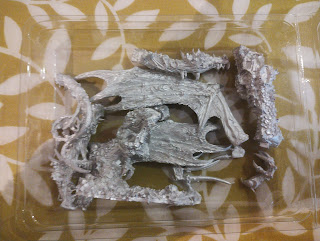
M.C.
Sunday, May 8, 2022
Trying my hand at some OSR Spells.
M.C.
Monday, May 2, 2022
The Wizards Cave: A mini setting/Planer travel
Travel between one setting to another has been a longstanding trope of D&D and much of the literature that inspired it. Throughout the editions of D&D there have been many methods, from portals or gateways to magical sailing ships. However it seems that many people associate Planer travel with high level play or expressly high magic settings, after reading through some Swords and Sorcery stories on the Appendix N list I have come see this as untrue. In fact I would argue that Planer travel is a style of play that can offer a large amount of variety both for players and DM's.
But how would low level PC's travel from one world to another? they don't have access yet to casting higher level magics that allow for such travel, this limits them largely to natural gateways or those made by higher level casters. The Wizards Caves are one such creation, inspired by the cave of Ningauble of the seven eyes from the Fafhrd and the Grey Mouser series, it is a labyrinthine cave system that can be accessed and provide access to multiple worlds throughout the multiverse. This provides an excuse for players to change settings from adventure to adventure or stay in one for awhile if they are invested, the Wizard himself may act as a patron of the party sending them to strange and outlandish worlds to acquire certain artefacts or complete special tasks for him.
So that's the what out the way now we must more to the how. What sort of system could simulate travel through this cave system? well there could be a dungeon crawl if the caves contain dangers though this encourages mapping and layout of an area that may not be consistent, so we need somthing a bit more abstract. Though i think it shouldn't entirely be random some manor of semi random generation may be necessary for such a level of abstraction, repurposing some of the overland travel rules such as chance to get lost or navigation may be a solid idea, the chance being lower or non existent on common pathways through the wizards domain much in the same way a road would work in overland travel.
So lets say they have a 30% chance to get lost as a base, this can be increased based on the players actions such as choosing an unlit and path +10%(+20% if they themselves don't have a light source), choosing a more natural looking cavern +30% etc. upon getting lost roll on a table to determine what sort of room they encounter:
Here is an example table with some ideas. d6
1. the players find themselves in on a clear path again and the chance to get lost is reset to 30%,
2. servants quarters, filled with what ever imps, homunculi or masked henchmen the wizard employs.
3. the players enter one of the Cavens inner sanctum (cumulative 15% chance to encounter the Wizard, the 7th time is guaranteed to encounter him) the cavern is filled with cryptic scrolls, alchemical fungi, piles of rusted armour, torn banners or other esoteric miscellanea
4. natural cavern filled with cave vermin like cave crickets or bats etc
5. dead end, return to last cross roads and reroll lost chance
6. A exit, possibly to another plane of existence, has a 10% chance for it to be the exit originally searched for by the players (if any)
This obviously needs more work and mechanical design, but i think functions as a basic concept.
let me know what you think, I will try to revisit this at some point with another post to expand this idea more but this post has been sat on my desk for about a week and I need to post somthing to get back in the habit so sorry if this isn't enough for you.
Monday, April 4, 2022
Pitching The Osr
While doing this I had a question pop up in my head that I thought would be good to make a quick blog post about, and that is "How would you pitch the OSR to someone unfamiliar with it?" this I feel is an important question, because OSR systems are so wrapped up in certain play philosophies and jargon that it can be hard to properly explain their appeal.
Guilded Server: https://www.guilded.gg/i/2OOA5qZ2
Monday, February 28, 2022
Dungeons Part 6: Layout Plans
Step on in this Mega dungeon project is going to be some general planning. Firstly I'm going to make a plan of the themes and content of each dungeon level, this is just going to be something rough in Ms paint to help me organise my ideas a bit.
| Starting with this as my base. |
Starting from the top, the Surface level will either be a smaller dungeon of itself or just a general description of the surroundings and the dungeon entrance, I'm going to leave this unplanned for now until I have a good idea of what's in the first level. Thinking about what sort of transitions from level to level and how the levels interact with one another helps tie the dungeon together as a coherent whole, my plan is to have each level have access to different resources each controlled by a different faction. The faction are weary of an all out war for fear of loosing access to a vital resource required for their survival.
| After a bit of thinking I ended up with this. |
So the different factions I have thought up so far are; The slavers lead by a flesh warping vivimancer, The leather skins lead by a dazzling illusionist, the pickers lead by a cruel necromancer and to round out the factions a slave rebellion lead by a scarred miner.
Though each of the faction leaders will have a lair on a different level to one another, their agents should be found on all levels in some way as well as being on each levels random encounter table. Though the factions are stuck in a cold war skirmishes and sabotage between factions should be common. Wearing the clothes and symbols of a faction will be enough to pass by their guards and most workers, some orderlies will spot a slave or guard out of place though.
The first level of the dungeon will have a central market surrounded by other areas serving different functions.
| My current mock up of the lvl 1 layout |
Each of the areas shown on the mock up can be expanded to be around 2-4 rooms each, which will quickly fill out into an expansive complex. to traverse from one area to another there will be a network of corridors, aqueducts and ventilation shafts.
Most corridors and rooms in this dungeon will be unlit except for those that see frequent use, those lit will be illuminated by oil lanterns or candles produced elsewhere in the dungeon. I'm planning on having some fire beetles or oil beetles on the second level.
Let me know what you think of the plans so far, i will begin work on mapping and stocking the first level fairly soon so should have something to show by the end of the week.
M.C.
Sunday, February 27, 2022
Dungeon part 5: Mega Dungeon Initial Idea.
So over the month of March, I am planning on creating a mega dungeon and writing out my design process here on this blog. This is largely what the last dungeon posts have been building towards, as I wanted to talk about the more theoretical side of dungeon making, to show what basis I am coming from when building a dungeon. I will upload the full keyed dungeon at the end of the month and I will be trying to make most of the maps on Dungeon Scrawl https://probabletrain.itch.io/dungeon-scrawl, so its pretty to look at.
I'm going to aim to do at least 3 level with 20-40 rooms per level. In terms of inspiration I wanted to do something based off the adventure The Lost City as well as the story "The Lords of Quarmall" by Frits Leiber, both of theses focuses heavily on human factions in a subterranean city and I feel is a great basis for faction play and role play.
For the system I'm going to be using Swords and Wizardry complete, and I will be levelling to around character levels 1-5. Since I am using a system that uses gold for XP, there will be a conscious effort to include more than enough gold and treasure items to appropriately level up over the Course of the dungeon.
I will be using the basic structure of the B/X dungeon stocking tables to determine the main content of a room, this table could be summarised as 1/3 Empty, 1/3 monster and 1/3 tricks or traps I like using this table because I think it gives a good spread of different types of encounters.
The starting hooks could be multiple things. Either the dungeon is a site that outside forces wish to infiltrate or the players are captured or hired by one of the internal factions. The addition of magical knowledge among the inhabitants could add to either possibility, this knowledge developed separate from the outside world may be an object of envy for a number of powerful wizards, or a means of trapping the party in the first place. Magic users also add a number of possibilities to the environment within the dungeon, illusions to hide secrets from rivals, magic traps to deter intruders and spells that improve the conditions in certain parts of the dungeon are all possibilities. It might also be an idea to group the factions based on what style of magic they prefer.
I'm probably going to write the next post in this series fairly soon and hopefully keep regular posts over the next mouth.
M.C.
Tuesday, February 15, 2022
Hex crawling and Sandboxing: Its possible.
Sunday, February 13, 2022
Dungeons Part 4: Themes and Factions
So one of the initial stages of planning a dungeon is coming up with what the dungeon is and what monsters inhabit it, this can help inform other parts of the dungeon such as traps, layout and treasure.
The Theme of the dungeon usually starts with its original purpose, the standard options you see a lot of are tombs, temples and forts of some kind. More unusual options will stand out more and can add a lot of variety to a dungeon crawl with elements that aren't usual to the standard dungeon types.
Regardless the original purpose of the dungeon is important for creating the layout and inbuilt features of the dungeon and on top of theses features made by the original builders of the dungeon, the current inhabitants may make modifications to theses pre existing features or make brand new owns. This for example may take the form of a cannel network used to transport materials in a dwarven city that becomes the home of a band of subterranean pirate goblins or a ventilation system to supply air deeper into the dungeon that has become the nest for a pack of giant rats. Think about what creatures might be able to make tools to tunnel through stone and how they may modify the dungeon to suit them more, either in terms of space or function.
In terms of factions, having a single faction for a small to medium dungeon works fine. But when building something larger adding in conflicting factions can make the dungeon exploration more dynamic. I think the best example of this I have seen in a dungeon is in The Lost City, in this dungeon there are 4-5 factions depending on how you look at things. There are the local mask wearing inhabitants, which contain within them three factions of priests of separate gods, and a group of hobgoblins that seem to have recently entered the dungeon based on the dead hobgoblin propping open the entrance to the city itself. Since 3-4 of these groups can be friendly or at least neutral to the party depending on multiple factors, it gives plenty of opportunity for roleplaying and a chance to form an alliance with one or more of the factions. Understanding how the different factions coexist or conflict is important to resolving character interaction.
A good way to organize both dungeon features and factions is to break the whole dungeon down into different areas(each roughly around 5-10 rooms in size), each with different common features and factions, for example a half submerged ruin may have a group of goblins living in the parts above water while some sort of fish men lair in the submerged area, the two groups may conflict over the local fish supply and other resources but would be perfectly content avoiding outright war (at least as long as there numbers are relatively equal and neither side has a clear advantage).
If your looking for a good source of inspiration for dungeon themes i would recommend checking out the Ruin tables in Worlds Without Number, these tables are available in the free version which can be found here: https://www.drivethrurpg.com/product/348809/Worlds-Without-Number-Free-Edition?term=Worlds+Without+number
M.C.
Friday, February 11, 2022
Mass combat in D&D and OSR
Lets be honest D&D is a power fantasy... And it always has been. The type of power fantasy may change but in essence it has always been a power fantasy. And what is more of a power fantasy than being the general of your own army, D&D had its roots in wargaming and many times have there been attempts at combining the two. From the original Chainmail system that was used for the combat engine of original D&D to the two systems TSR developed "Battle System" and "Warmachine" and even some OSR system and supplements that include mass combat such as Adventurer conquer kings and Strongholds and Followers. So I think there is a group to which such things appeal, Personally I have a background in Warhammer fantasy and 40k so combining two of my hobbies does appeal to me in some way.
So how exactly can Mass combat be done? this can be case of how abstract you want to be, the different sides are between an abstract calculation where you add a bunch of modifiers to a dice roll and then get a result that determines how the combat went and on the other end you have something closer to a wargame with units that you move about and make attacks with. There are plenty of middle ground too between to adjust to you or your groups tastes.
The abstraction method works best for concluding large scale battles quickly and clearly, and would be well suited for siege warfare and other types of non conventual warfare, this is the method used by the Warmachine system or Adventurer conquer king,
The Wargame method would be be better for skirmishes and small scale battles, the sort of things that would happen if you have a few dozen mercenary's escorting your adventuring party and roll up a 40-50 orc warband on the wilderness encounter table, simply organize the forces into units of 10 pool their hit points and attacks and then run them as one creature. Systems like Swords and Wizardry have rules for this method.
So is a Hybrid system the best approach? since both methods excel at different aspects of warfare and at different stages of the game then could using a wargame approach to simplify large groups of allies and enemy's, and then a simple calculation for large scale wars and sieges. This is probably the approach I am going to try in the near future(hopefully some of the games I'm running reach this point.) Finally there are some stuff I would recommend for 0a taste of this style of play both free pdf's, First Adventure Conquer Kings Autarch Domains at war which is an example of the first method and second Swords and Wizardry Complete which has a simple mass combat rule that is what I highlight in the second method.
ACK Domains At War; https://www.drivethrurpg.com/product/113499/ACKS-Domains-at-War-Free-Starter-Edition?manufacturers_id=4277
Swords and Wizardry Complete:https://www.froggodgames.com/product/swords-wizardry-complete-rulebook/
Let me know what you think about this subject, Any systems you like to use for mass combat I would be interested in discussing it.
M.C.
Thursday, February 10, 2022
Dungeons part 3: Dungeon generators I have used.
Dungeon Generators are a useful tool for jogging your imagination, I sometimes find it useful just to have a random room size or just to have a random room type to work with. The key to using Dungeon generators is to modify the results towards something a bit more coherent, a lot of corridors created by generators will be too long and twisting so these are defiantly something to be aware of when building dungeons. So here are some generators I have used in the past, I generally consider them to all provide the most basic part of any dungeon generator which is the room and corridor generation.
1.5e DMG's Appendix A:Random Dungeons, This is a decent one to start with, its suited for small to medium dungeons(which i consider about 10 rooms) one thing I would caution that in the stocking section of this generator you have a 50% chance to have a monster in that room, Personally I prefer to have a 1/3 chance of monsters. This generator has some decent dungeon dressing tables though the tricks table could do with being a bit larger.
2. Table Fables 2 By Madeline Hale, This is probably the most economical option on this list and probably the simplest, for what it is I like it a lot, again this is a good option for small to medium dungeons. Its a very useful tool for just getting some room sizes and I enjoy the Notabilities & Peculiarities table (my favourite option is when the dungeon is in a farmers field and so is infested with sheep)
3.OldSkull Dungeon Generator by Kent David Kelly, This is what I've currently been fiddling around with, an expansive series of tables though it does sometimes refer back to other books in the Classic dungeon design guide series so may not be a complete product on its own, The complexity of these tables can get a bit unwieldy at time.
4.Tome of Adventure Design By Frog God Games, This is a great book for all kinds of random tables and the dungeon creation table is no difference. instead of rolling corridors for this generator you roll for layout of a Dungeon Area, number of rooms in a section and then the room sizes, the exact way things are laid out is up to you .You are guaranteed to have a Special room in every Dungeon Area, these are much larger and often unusually shaped room, in terms of size this generator works better for larger dungeons though it really depends how many Dungeon areas you string together.
I might try putting together my own dungeon tables in a later blog post I think it would be a good exercise, let me know what you think of dungeon generators or if there's any you would recommend.
Sunday, February 6, 2022
The most controversial B/X Clone: Lamentations of the flame princess.
As I mentioned in the previous article Lamentations of the flame princess was a massively influential system in the OSR, At its core it is a version of B/X D&D with some house rules (which are pretty good house rules mind you) so why is it controversial? well it has transgressive material, an edgy creator and MAJOR DRAMA.
So before we start its worth giving a bit of a content warning: WARNING LOTFP PRODUCTS TENDS TO CONTAIN DARK THEMES, SENSETIVE TOPICS, NUDITY AND GORE, THIS IS NOT SUTIED TO SENSETIVE READERS.
So with that out the way, lets get on with the review. Lamentations of the flame princess(or Lotfp from now on) was created by James Raggie the 3rd, a man who loves to court controversy and push the bounds of what is considered acceptable(to the point that he regularly plays chicken with what he can sell on Drive thru rpg), James has been in many controversies over the years from fighting against the satanic panic (even after it is long dead and buried) by putting in edgy satanic stuff in his adventures(and publishing a book on using satanic rituals in the running of ttrpg's) to involvement with other controversial people and of course the content of his adventures (very edgy).
Firstly its worth talking about some of the design philosophy of lamentations. Firstly Lotfp calls itself weird fantasy, this is a part of the weird fiction genre, a genre that is defined by the reinterpretation of classical monsters or use of transgressive material, this genre includes subgenres such as cosmic horror, Swords and Sorcery and Weird Science etc. Lotfp doesn't believe in the standard, it doesn't have a magic item list or a monster manual, it advises if you uses monsters outside of the mundane that you only use them once to keep the mystery and that most of the time you keep the game grounded, how grounded? well the implied setting that has formed for Lotfp is a historical setting, with a silver standard currency and black powder weapons (that take a accurate amount of time to load)
The Ability score modifiers are the standard B/X spread of -3 to +3, standard 3d6 ability score generation with a house rule that you reroll the set if the total of all the ability modifiers added together is less than 0. there are a hit point minimum for first level based on class, only fighters improve their to hit bonus and that includes the dwarf and elf race as class options(this seems a big deal but its worth noting that practically nothing goes beyond AC 18 in Lotfp). Alignment is a thing but is only really there to determine the results of being targeted by certain spells or magic items (you also don't have a choice most of the time a cleric is always lawful and a magic user is always chaotic etc).
Classes are the standard B/X affair; Cleric, fighter, magic user, Thief(or specialist as its know in Lotfp) dwarf, elf and halfling. There is some flair with the execution and house rules, clerics get spells at first level, but turn undead instead of being a class feature is a spell on the cleric spell list. Fighters get the before mentioned to hit bonus increase, Magic users get d6 hit dice at first level, Specialist uses d6 for skills and can chose where to focuses their skill increase(including sneak attack) and gets hit dice changed to a d6 too. Dwarves get d10 hit dice, additional encumbrance points, a d6 architect skill that starts at a 3in6 chance, a +1 to their con modifier and they are the only class that gets to add their con bonus to their hp gains each level after 9th (which is huge and probably makes them my favourite version of the dwarf in any fantasy game), Elf's get the standard magic while also being able to cast one handed, they get a search check that starts at a 2in6 and a reduction in surprise chance (down to a 1in6 chance). Lastly halflings get a +1 to their dex bonus, a +1 to ac when not surprised, a 5in6 stealth skill and a bush craft skill that starts at a 3in6 chance.
The equipment lists are some of the best I've ever seen, it has all the standard stuff plus extras that add to the feel of the game. Stuff like man catchers and Garrote's added to the weapon list, Silver weapons having a 1 in 10 chance to break whenever they are used and the lists of black powder weapons in the appendix of the book, these additions add a very dark fantasy tone to the generic fantasy B/X rules. And that's just the weapons portion of the equipment lists, other great additions is the two costs for everything, a rural cost and a urban cost, the list of services from travel and posting to lodging and the list of vehicles and livestock, these tables add so much info about the setting while barely being a paragraph between them.
There are simple rules for a wide range of occurrences such as foraging and hunting, disease and aging, drugs and alcohol consumption, poison and starvation and even sleep deprivation(i have seen at least one monster ability that can rob you of the ability to sleep before so a useful rule to have you never know) one of the most interesting abstractions are the language rules, where instead of having a list of languages for the players to know you have a chance to understand a language the first time you hear it.
Encumbrance uses a point based system to simplify carry weight. wearing heavy armour gives encumbrance point, carrying over sized items or weapons add a point and having certain number of items gives points. These points then translate into your encumbrance status and movement speed. It is worth noting at this point that classes in Lotfp doesn't limit what weapons or armour you can use but your encumbrance can prevent you using magic and some skills. This section also has rules for mounts and pack animal encumbrance and movement which uses the same point based system as the player characters do.
There are then some rules for maritime travel and combat, an expansive section on hirelings (including rules on slave ownership which fits the historical setting) and section on property and finance (with some great abstractions to reduce the number crunching a bit). I appreciate these sorts of thing as it gives more for you to spend your silver on.
Combat is what you would usually expect, there are some house rules such as parrying, aiming and firing into melee etc. but largely the house rules are there to answer common questions that come up playing B/X.
Magic in Lotfp gets interesting, house rules on recharging magic staffs, laboratory's and some more rules on spell scrolls and research etc, but the spell list has been revamped to remove or change certain spells and add entirely new spells. Much of the spells removed are direct damage or resurrection spells and much of the changes or new spells have odd or unpredictable results, such as Duo-Dimension that makes a target 2d or the well loved summon spell that summons a random entity from the outer planes(the creatures summoned range largely in form or effect), a lot of this reflects the more dangerous and unreliable nature of magic in swords and sorcery or dark fantasy fiction.
Lotfp is one of my favourite B/X derived systems though its not for everyone, I felt the need to look over the system again given the recent new releases. In terms of good adventure and supplements for Lotfp, I would recommend watching/reading some reviews first as quality and content varies wildly.
Links to the Core books,
Player book: https://www.drivethrurpg.com/product/115059/LotFP-Rules--Magic-Free-Version?manufacturers_id=2795
Referee book: https://www.drivethrurpg.com/product/148012/LotFP-Referee-Book-old-Grindhouse-Edition?manufacturers_id=2795
M.C.
Saturday, February 5, 2022
What even is the OSR? part 1: how did we get here?
Thursday, February 3, 2022
Dungeons: part 2, Dungeon Inspiration and recommended reading,
Inspiration for a dungeon comes from many places and having a mix of elements inspired from different things can help make a dungeon varied. I generally like to start with what major monsters live in a dungeon when designing it so to me good dungeon inspiration and good monster inspiration are the same. For example if the monster was the original creator of the dungeon part of it might be made to benefit their species and disadvantage others, such as covers for pit traps that can bear the weight of a kobold but not a larger creature, or large vertical shafts for something like a Drow that utilises giant spiders to traverse their caverns. These features can also allow different characters to shine in their area of expertise, such as a wizards utility magic allowing for you to traverse an otherwise impossible obstacle, or a thief's ability to climb or find traps.
A lot of dungeons from fantasy fiction are great for inspiring dungeon content or themes, but usually don't detail out the layout of the dungeons too heavily for obvious reasons (it not being the most entertaining reading). Video games on the other hand allow you to explore expansive dungeons and can display a wide range of layouts. Not all of these are the best, games like Skyrim tend to have highly linier layouts, but never the less video game levels are closest in terms of design concerns to D&D dungeons. My personal recommendation is the first part of the original dark souls game, it has so many interconnected locations with varied designs and is a great example of a type of mega dungeon.
In terms of books on dungeons I would recommend the Classic Dungeon Design Guide series by Kent David Kelly. It is a rather in-depth series that runs you through the different stages of dungeon design, from developing a concept and planning the floors/sections to adding in dungeon dressing and traps from a wide range of random tables (including some d1000 tables) as well as a dungeon generator book. This series is most useful for larger dungeons especially mega dungeons, you might find some useful information for smaller dungeons. I have used this book series in the past to help design a dungeon for a west march game I was a part of, and I can say I was pretty satisfied with the results.
Drive thru RPG link:https://www.drivethrurpg.com/browse/pub/7178/Kent-David-Kelly?term=kent+david+ke
Let me know what inspiration or tools you use I am always looking for a good dungeon generator.
M.C.
Tuesday, February 1, 2022
Dungeons: part 1, place in the world
Dungeons are a corner stone of early level play in many editions of D&D and OSR systems, I think that a understanding of dungeon design and techniques can benefit a DM.
Firstly dungeons are an example of location based play, not all locations are dungeons but all dungeons are locations. Part of this is a dungeon usually has a map, this helps with a lot of dungeon crawling procedures that relies on time and distance to operate smoothly. Size is a matter of needs at the end of the day, as part of a hex crawl smaller dungeons and locations can be useful as travel adjudication and decision making takes up a suitable portion of play. Common small dungeons and locations encountered in a hex crawl may be monster lairs and camps, having some maps of these ready made are a good idea before starting a hex-crawl. More moderately sized dungeons around 10-12 rooms are usually want you want for something to last a few sessions, and mega dungeons usually have infinite rooms, mega dungeons are either a site that can be returned to over and over again with other dungeons and adventures in-between or almost the entirety of the campaign.
Trying to tie the dungeon into the wider world is important for immersion and creating the feeling of a living virtual world, many module dungeons don't do this as part of the limitations of modules and there are exceptions but bare in mind that some tweaking may be beneficial expressly if the dungeon is meant to last more than one or two sessions of play and if it is meant to be a location the players go back to repeatably. One way in which a dungeon can be tied into the wider world is due to a piece of loot sometimes found in OSR system's treasure tables, treasure maps!, these are self explanatory its a set of directions or an image of a location with the promise of even more treasure, this can generate its own adventure depending how far away or how hidden/guarded the treasure is, having some sort of distinctive landmark be described or shown on a map can help the players find the treasure easier.
Next time ill talk a bit about inspiration and books I have found useful in building dungeons.
M.C.
Friday, January 28, 2022
SWN sessions 1-3 play report.
This is a play report of my Stars without number game i started last December, its set on a post apocalyptic planet whose factions range wildly in tech level though most are unable to create modern tech such as firearms and effective medicine. Starting out I had two players one playing John Wailing a solider from the east seeking out his kidnapped
son and the murderers of his wife, the other players Zinaida Sokolov, a Psychonic scientist seeking out other Psionic masters to learn from.
The party starts a return journey to Pitt, getting ambushed by large flightless birds on their way there, John manages to scare them off my shooting into their group a few times. Upon arriving in Pitt, John meets up with Isabell again to discuss the part for the machine and she mentions a member of the Chalk thumbs that may be a good guide for the great rubble, John and Barrel go to meet this guide and make a deal for his services.
Wednesday, January 19, 2022
Mutant making, Rolling up mutated fauna
Trying to expand my random encounter tables for my Stars Without Number Apocalypse game I felt the need to roll up some Mutants to pad out the world, I've been using some tables from Other Dust and Maximum mutagenesis for randomized mutations and then selecting the combinations I like the most and expand .
1. Pygmy Tiger, this predator is a miniature Saber-toothed tiger evolved out of housecats, they hunt in packs and have remarkable cunning
Monday, January 17, 2022
Keep monsters weird
Generic fantasy is an oxymoron, how can fantasy be generic? Well if every setting has the exact same monsters (Elves are patient 0) and much of the same lore then something of the fantasy is lost, magic is all about the unknown after all you can only expect a bunch of players to feign ignorance over a trolls weakness for so long(even people who don't play D&D know its fire come on).
Making your own monsters is one good remedy for these problems of course and there's lots of great random generators out there (Tome of Adventure Design by Frog God Games has a good section on generating monsters and The Random Esoteric Creature Generator by Jamie's Raggi is #1 for Weird as well as having a good section on this very subject, though the art may not be suitable for sensitive readers YOU HAVE BEEN WARNED) however I think that its how you put together these random elements that makes the monster.
Another important concept is to think about monsters in a more mystic and less scientific way, think less in neat categories and in more of an esoteric way, creatures grown in a wizards vat or born from a fallen star. A creatures creation story doesn't have to be logical or even be true in universe (unreliable narrator is a great technique for a DM in my opinion) it just has to be a compelling piece of fluff to ignite your and your players imaginations.
I'm planning on sitting down and rolling up a bunch of mutant monsters for my Stars without number game and I think it would be a good way to reflect on monster creation, so expect a post on that in the future. Any why let me know what you think about this subject and if there's anything you think I should go into more detail on.
M.C.
Saturday, January 15, 2022
Why I love the OSR, Exploration is king
I think one of the biggest epiphanies I've had playing TTRPG's is that above all else I enjoy the process and rewards of exploration the best, from starting with 5e d&d where exploration is a stated "Pillar of Play" yet seemingly poorly used or understood, with missing dungeon crawl procedures, overreliance on the exhaustion mechanic for overland travel and everything being a DC check to the point where running a hex crawl rules as written must be rolling a dozen d20s every hex (which bogs down the game and is basically just fishing for success/failure after awhile)
It was really when I discovered the OSR that I had this realisation, a lot of the OSR books I have read emphasis exploration, from systems that heavily focus on these aspects of the game like Stars Without Number and Worlds Without Number, to adventure and setting books based around exploration and sandbox-style gameplay such as Hot Springs Island and Carcosa.
So what is exploration? Exploration in the simplest terms is the process of freely interact with a location; The GM creates the elements of the location and then you are free to manipulate the environment through the actions of your character. In game terms there are certain mechanics that form a structure for exploration. These are usually things that have values or measurements to them (Time, weight, size, distance etc) and abstractions for more loose or unpredictable elements (random encounters, weather, reaction rolls etc). This structure helps to ground the actions taken in a sort of virtual reality, but are not meant to precisely model the physics of the virtual reality. For example: the mechanics of the game may lay out how to open a chest with a crowbar or lockpick but the chest itself has certain properties. You could for instance infer that a wooden chest doused in oil may be burnt through (at risk of any flammable content) the rules are in place for abstracting common actions.
M.C.
Wednesday, January 12, 2022
Operation Whitebox, OSR WW2
One OSR system that I have pondered over a bit is Operation Whitebox, a WW2 special forces roleplaying game based off Swords and Wizardry whitebox. A very easy to use system that mostly only uses d6s and d20s and with a relatively low level cap of 5.
Classes are charmer, combat engineer, grunt, maquis, sniper, tactican, wheelman and uberlaufer, being based on whitebox each class has 2-3 class features a circumstantial bonus to your saving throw and a bonus gained on reaching 3rd level (usually some henchmen)
weapons like with whitebox all use d6 to varius degrees, and the OD&D rate of fire on range weapons make some appearance though most weapons only have a rate of rife of 1 or burst which can allow for a +2 to hit with more ammo usage or suppressive fire which is more of an area effect which anyone moving through is hit by a random amount of damage, heavy weapons consist mostly of explosive weapons (plus flamer)
Armour is... non existent, well you have Battle dress uniform which provides a +1 to AC and antiquated armour (that only provides a +1 bonus against bullets and explosions), given that the largest Dex bonus is a +1 (+3 with the advanced ability modifiers optional rules) your looking at a max AC of 12 and its not like your going to find any +1 chain mail in occupied France so cover and tactics are definitely the name of the game, to survive your going to have to think like a special forces operative,
This book also contains some information on the war and special forces that GMs may find useful for running games in the historical setting as well as a time line of the war, Rounding off the main system is a example mission and a mass combat resolution rule.
The standout part of this system however is the mini settings in the back: Nazi Super Science, Nazi Occult and Galaxy War 1939 (WW2 in space!!!), these settings each offer interesting pulp adventure opportunity's and the systems compatibility with other OSR systems and adventures allow you to really go wild just take a look at Bandits keeps Operation Ravenloft a Operation Whitebox campaign that runs through the original castle Ravenloft module https://youtube.com/playlist?list=PLG3jiZCzff_4ymaLxY-CuUIzM7e0F3fb9
the possibility's are endless race to find the Ark of the Covent, gun down hoards of Nazi zombies, shoot a dragon with a rocket launcher or fight hover tank battles on the moon
https://www.drivethrurpg.com/product/196284/OWB001-WWII-Operation-WhiteBox?cPath=26684
https://www.drivethrurpg.com/product/251318/OWB001-WWII-Operation-WhiteBox-FREE?cPath=26684
let me know that you think of the system, this was only a brief overview but I hope I have highlighted something you might find interesting.
M.C.
Tuesday, January 11, 2022
Making the OSR less Deadly?
One of the things that the OSR is well know for is its deadliness, this can be great for those looking for a challenge and is largely deserved but sometimes the deadliness isn't a result of intentional game design but unspoken assumptions and rules not being followed.
The first of these big assumptions is group size, early D&D was focused round groups of 6 as a minimum as well as assuming at least a few retainers or hirelings, many retro clones and even some more contemporary OSR systems tend to run on the same assumptions, a few house rules such as starting with max hp at level 1 or more access to healing (especially if the party doesn't have a cleric)can help make these systems a bit less of a meat grinder for smaller groups which are more common in the modern TTRPG hobby
Another that I have heard lamented by others who have been in the OSR longer than me, is that more modern OSR adventures don't have enough treasure to level the party at an appropriate rate, this might not be a direct problem to you if you are creating your own dungeons and adventures but keeping in mind that treasure is a crucial resource for levelling in OSR systems as well as providing access to equipment and hirelings that make future adventures possible, it is worth over stocking a dungeon with hidden treasure rooms or optional side areas
lastly be careful about throwing poisonous monsters especially ones that attack from ambush like some giant spiders, poison is one of the deadliest mechanics in OSR systems as most use the classic save or die poison, though as long as your players are aware of the risk such monsters pose and there's some telegraphing (such as spiders webs and snake skins) nothings stopping you from putting pit snakes or giant jumping spiders in your level 1 dungeon (I suppose level draining monsters are similar but they are usually found on higher dungeon encounter tables and rarely on wilderness encounter tables)
lots of this is just adapting your game to the type of group you have, though I have often found myself running for quite small groups, let me know that you think of this post
M.C.
Thursday, January 6, 2022
Travel in D&D isn't broken
Just a quick blog post as I've not posted something in the last few days, one thing you can find in abundance on YouTube is advice videos on how to "Fix" travel or "how to make travel more interesting" this implies that travel in D&D is broken or boring and to be honest I disagree I think D&D Travel does exactly what its trying to.
Firstly I think this is an issue about what fiction exactly we are trying to emulate, a lot of the assumptions around "fixing" travel seems to be from the premise that high fantasy epics like Lord of the Rings or Wheel of Time are the examples to be followed, in these story's the journey lasts a considerable amount of time, in a lot of ways more important than the destination, it is during the journey that a lot of character development and action happens this is a polar opposites to D&D's heavily abstracted travel.Old worlds gulrach the great drake
One of the most iconic models from when i first entered into the warhammer hobby has to be the classic gulrach the great drake, i remember t...
-
Hello Again, Looking at the currently most well know OSR Systems (DCC, OSE and Mork Borg) there seems to be a problem with price and availab...
-
So Starting at the beginning, Swords and wizardry has some clear differences in pc race option design especially how they are balanced, S...
-
So over the month of March, I am planning on creating a mega dungeon and writing out my design process here on this blog. This is largely wh...